FRPU
window
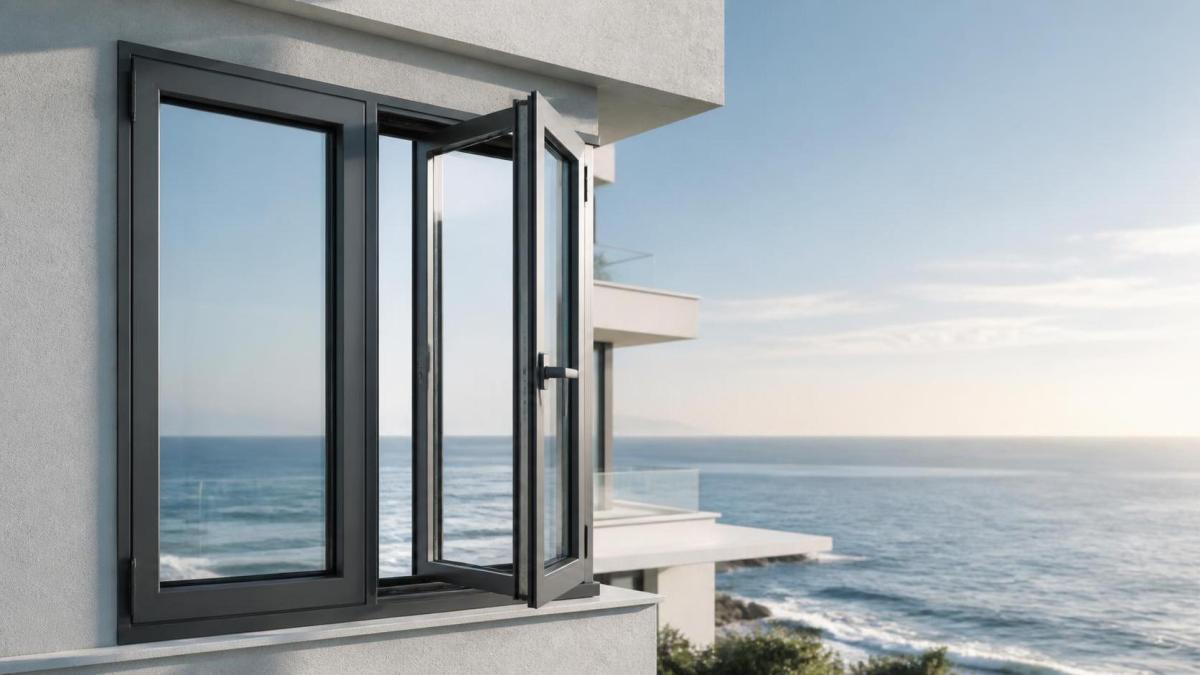
Pultruded FRP fiberglass window with polyurethane resin matrix. No steel liner, excellent thermal insulation, salt‑corrosion & weather resistance. Fit for passive house, coastal and high‑rise projects, customizable casement & sliding styles.。
What is the lifespan of corrosion resistant FRPU windows? In practical terms, a well-designed and properly installed FRPU window system is intended to remain serviceable for decades, including in places where conventional metal-framed windows often require early repair or replacement. But “decades” is not a single warranty number. The real answer depends on the profile formulation, window design, glass package, hardware quality, installation details, exposure conditions, and how the building is maintained.
That distinction matters. A window may still look acceptable from the street while its seals have hardened, drainage paths are blocked, hardware is wearing, or the frame-to-wall joint is allowing water intrusion. For coastal buildings, chemical facilities, humid villas, and energy-efficient projects, lifespan should be judged as the life of the complete window assembly—not just the frame material.
FRPU Windows Are Built for Long-Term Exposure, Not Just Initial Appearance
Pultruded fiberglass-reinforced polyurethane, often called FRPU or GFRPU, is a composite profile material made by continuously pulling reinforcing fibers through a polyurethane resin system during production. The resulting profile combines the tensile strength of glass fiber with the corrosion resistance and insulation characteristics of the resin matrix.
For windows, one of the most meaningful design advantages is that FRPU profiles do not need internal steel reinforcement to achieve structural stability. This avoids a familiar weak point in reinforced PVC window systems: steel can corrode if moisture reaches the profile interior, and it creates a thermal bridge that affects insulation performance. An FRPU frame is structurally capable without relying on hidden steel, so there is no internal metal member waiting to rust in a salt-laden environment.
FRPU also has a thermal expansion behavior closer to concrete walls than aluminum. In buildings that experience strong day-to-night temperature swings, this can reduce stress at the frame-to-wall interface. It does not eliminate the need for correct joint design, sealants, and fixing methods, but it can make the window system less prone to movement-related sealing problems over time.
So, when people ask what is the lifespan of corrosion resistant FRPU windows, the reasonable expectation is not a short replacement cycle. Properly specified FRPU windows are generally selected for long service life in demanding conditions. The exact duration should be confirmed through the supplier’s technical documentation, component warranties, project requirements, and local building conditions rather than assumed from the profile material alone.
Why Coastal and Industrial Sites Change the Lifespan Calculation
A window installed in a sheltered inland residence faces a very different set of risks from a window exposed to sea spray, tropical humidity, industrial emissions, or regular wind-driven rain. The frame may be corrosion resistant, but the full unit still includes fasteners, hinges, handles, glazing spacers, gaskets, sealants, drainage covers, and locking components. Each must be appropriate for the environment.
In coastal construction, chloride-bearing moisture is usually the long-term enemy. Aluminum can pit or corrode where coatings are damaged or poorly maintained. Steel elements are even more vulnerable unless protected carefully. FRPU profiles do not oxidize in the same way as metal frames, which is why they are a sensible option for seaside hotels, waterfront villas, island housing, and marine-adjacent commercial buildings.
Chemical plants and workshops introduce another question: what chemicals are present in the air, and are they occasional or continuous? “Corrosion resistant” does not mean universally resistant to every solvent, acid, alkali, or cleaning agent. A responsible material selection process should identify the actual exposure and confirm compatibility with the profile surface, gasket material, glazing sealant, hardware finish, and wall sealant. The frame can be exceptionally durable while an unsuitable sealant fails first.
UV exposure also deserves attention. High-quality FRPU window profiles are designed for outdoor use and can offer strong resistance to UV aging, but color retention and surface appearance depend on the resin formulation, pigment system, coating approach, orientation of the façade, and local climate. South- and west-facing elevations in hot, high-sunlight regions usually deserve more scrutiny than shaded façades.
The Frame Is Not Usually the First Part of a Window to Fail
This is where material comparisons often become misleading. A durable FRPU profile can outlast several replaceable components, especially in operable window systems. Casement, tilt-and-turn, top-hung, hopper, sliding, bi-fold, and louver windows all have different wear patterns because they use different hardware and experience different loading.
For example, a fixed FRPU window has no hinges, rollers, handles, or multipoint locking mechanism. Its long-term performance depends mainly on the frame, glazing seals, glass edge system, drainage design, and installation joint. A large tilt-and-turn window, by contrast, carries repeated operating loads through hinges and locking points. A sliding window introduces roller wear, track cleanliness, and alignment issues. Bi-fold systems require especially careful attention to panel weight, hardware capacity, and adjustment access.
Glass selection can also affect the perceived lifespan of the window. Insulated glass units, Low-E glass, laminated tempered glass, and other glazing options solve different problems. Insulated glass supports thermal performance; Low-E coatings help manage heat transfer; laminated glass can improve safety and acoustic performance. Yet any insulated unit can eventually lose performance if its edge seal fails. This is not unique to FRPU, but it reinforces the need to evaluate the whole configuration.
FRPU Compared With Aluminum, PVC, and Timber
Aluminum remains popular because it is familiar, widely available, and suitable for many large-opening systems. However, conventional aluminum framing has high thermal conductivity. Thermal-break designs improve this substantially, but the quality of the thermal break, corners, drainage layout, surface finish, and fabrication all matter. In coastal areas, coating damage and corrosion risk should be considered alongside structural performance.
PVC windows can offer good thermal insulation and a competitive initial cost. Their long-term behavior, however, depends heavily on profile design, wall thickness, reinforcement strategy, heat exposure, and fabrication quality. Large sashes, dark surface colors, hot climates, and high wind loads place more demands on the system. When steel reinforcement is used, the steel itself becomes part of the durability discussion.
Timber can be beautiful and highly insulating, particularly in premium residential work. But it requires a maintenance commitment that should not be underestimated. Coatings, end grain, drainage details, and moisture management determine whether timber ages gracefully or deteriorates early. For a coastal rental property or remote building where regular repainting is unrealistic, this can be a decisive drawback.
FRPU sits in a useful middle ground for projects needing structural strength, low thermal conductivity, corrosion resistance, and lower routine maintenance. It is not automatically the best choice for every opening. Very large façades, unusual architectural shapes, local supply availability, hardware ecosystem, fabrication capability, and budget all need to be reviewed. The best frame material is the one that remains technically appropriate after those practical details are considered.
What Shortens the Service Life of an FRPU Window?
Poor installation is probably the most avoidable cause of premature window problems. Even a high-performance composite frame cannot compensate for an opening that is out of square, inadequate anchoring, blocked sill drainage, incompatible foam, or sealant applied to an unprepared substrate. Water that enters a faulty perimeter joint can damage surrounding finishes and insulation long before the frame itself shows distress.
Another frequent mistake is specifying the frame but treating hardware as an afterthought. In a salt-spray environment, standard hardware that is acceptable indoors or in a mild urban climate may corrode or seize sooner than expected. Large sashes need hardware selected according to actual sash size, glazing weight, opening frequency, and wind exposure. There is no benefit in choosing a high-strength FRPU profile if the hinges and locking points are underspecified.
Fabrication quality is equally important. Corner connections, glazing beads, gasket compression, screw fixing, drainage channels, and sash alignment affect water tightness and operating life. This is why manufacturers with in-house pultrusion capability and full-range production quality control can offer a practical advantage: profile design and finished-window fabrication can be evaluated together rather than treated as unrelated supply steps.
How to Specify for a Longer-Lasting Result
A better purchasing conversation starts with the building, not with a color chart. Ask where the project is located, how close it is to the sea, whether the façade receives direct rain, what the expected wind conditions are, whether the building is heated or cooled continuously, and how often windows will be opened. A passive-house-style residence, a tropical homestay, a chemical plant office, and a coastal apartment block may all benefit from FRPU, but they should not receive an identical configuration.
Before finalizing a window system, it is sensible to confirm the following:
- Whether the chosen profile, glazing, hardware, gaskets, and sealants are suitable for the intended exposure.
- The sash dimensions and glass weight, especially for tilt-and-turn, bi-fold, and large casement units.
- The installation method for the actual wall construction, including concrete, masonry, steel structure, or insulated wall systems.
- Drainage access and maintenance procedures after handover.
- Whether custom profile moulding, color selection, and glazing options alter lead time or require additional technical review.
For distributors and contractors sourcing internationally, it is also worth checking how the system will be fabricated, assembled, packed, and supported in the destination market. A complete FRPU window solution may include casement, sliding, fixed, top-hung, hopper, louver, tilt-and-turn, or bi-fold formats, but the local team still needs clear fabrication and installation guidance. Durability is partly engineered at the factory and partly protected on site.
A Realistic Answer: Long Life Requires a Complete System
Corrosion-resistant FRPU windows are designed for projects where ordinary frames may struggle with salt, moisture, UV exposure, thermal movement, or high insulation demands. Their steel-free pultruded composite profiles offer a durable basis for long-term use, particularly when compared with materials that rely on exposed or internal metal elements in corrosive settings.
Still, no responsible supplier should promise a universal lifespan without reviewing the project. The profile may remain stable for a very long time, while gaskets, insulated glass, hardware, or perimeter sealants need service earlier. The practical goal is not simply to buy a frame that survives. It is to specify a window system whose frame, glass, hardware, drainage, and installation details all age at a reasonable pace in the environment where it will actually be used.