FRPU
window
Pultruded FRP fiberglass window with polyurethane resin matrix. No steel liner, excellent thermal insulation, salt‑corrosion & weather resistance. Fit for passive house, coastal and high‑rise projects, customizable casement & sliding styles.。
A window profile may look simple once it is installed: clean sightlines, stable corners, a tight glazing seal. Yet the performance of that finished window begins much earlier, inside a carefully engineered die. For steel-free composite window and door systems, pultruded FRPU profile custom mold development determines far more than the visible cross-section. It influences insulation values, screw-holding zones, drainage paths, glass compatibility, structural behavior, assembly accuracy, and the profile’s ability to remain stable through years of sun, rain, salt air, and seasonal temperature change.
For window manufacturers, distributors, and project teams, the question is rarely just “Can this profile be made?” The more useful question is: “Can it be made repeatedly, within tolerance, and in a form that works with our glazing, hardware, installation method, and target market?” Custom mold development is the process that turns those requirements into a pultrusion tool and, ultimately, into a manufacturable FRPU profile system.
Why a Custom Pultrusion Mold Matters in Window and Door Design
FRPU, also described as fiberglass-reinforced polyurethane or GFRPU, is a pultruded composite material formed by continuously pulling glass reinforcements through resin impregnation and a heated shaping die. Unlike conventional aluminum extrusion, pultrusion is not simply a matter of pushing material through a shape. The resin chemistry, fiber arrangement, pulling behavior, heat profile, and die geometry must work together throughout a continuous curing process.
That distinction matters in fenestration. A profile for a fixed window frame can be relatively straightforward, while a casement sash, tilt-and-turn frame, sliding interlock, or bi-fold door component often needs several functions within one cross-section. It may need hardware fastening areas, glazing rebates, weather-seal grooves, drainage chambers, connection flanges, thermal separation, and stiffness in a specific direction. A minor adjustment to one wall, corner radius, or cavity can affect the rest of the design.
Custom tooling is especially valuable when a project cannot accept the compromises of an off-the-shelf profile. A passive-house-oriented window may prioritize a deeper thermal path and insulated glazing pocket. A coastal resort may need robust drainage geometry and corrosion-resistant material performance without internal steel reinforcement. A renovation system may require frame dimensions that suit existing openings while preserving the desired visible glass area.
Standard Profile Tooling vs. Custom Mold Development: What Actually Changes?
Choosing between an existing profile and a custom mold is not simply a choice between “fast” and “tailored.” It is a trade-off between early convenience and long-term system fit. Existing tooling can be appropriate where dimensions, hardware positions, and glazing requirements already align. A custom pultrusion die becomes more relevant when the profile itself must solve a project-specific problem.
The key is not to pursue customization for its own sake. A well-designed custom tool should reduce downstream work: fewer packing pieces, fewer awkward adapters, cleaner assembly steps, and less reliance on added metal components that may create thermal bridges or corrosion concerns.
The Development Starts with the Window System, Not with the Die
Good mold development begins before tooling drawings are released. The profile supplier and customer need to establish what the finished product must do. In the window and door sector, this usually means reviewing the complete system rather than treating each profile as an isolated part.
Questions at this stage often include:
- Is the profile intended for casement, sliding, tilt-and-turn, fixed, top-hung, hopper, louver, or bi-fold applications?
- What glass build-up must the glazing rebate accept: insulated glass units, Low-E glass, laminated tempered glass, or another combination?
- Which direction will wind load act on the frame and sash, and where must stiffness be concentrated?
- Will the system use standard hardware, concealed hardware, multipoint locking, or project-specific accessories?
- How will water be drained, and where will gaskets, glazing beads, corner keys, and fasteners sit?
- Are there installation constraints, such as concrete openings, curtain-wall interfaces, or renovation frames?
This is also the point to identify target markets and exposure conditions. A building near the sea, for example, presents different durability priorities from an inland residential project. FRPU’s resistance to corrosion, salt spray, UV aging, and moisture makes it a compelling alternative to profiles that depend on steel reinforcement. Still, the profile geometry must support those advantages. Poor drainage design or unsuitable assembly details can undermine even a strong material choice.
For global projects, it is wise to consider local glazing conventions, hardware availability, shipping lengths, fabrication methods, and installer expectations early. A profile that is technically sound but difficult for the local fabrication team to cut, drill, seal, or assemble may create avoidable friction later.
From Cross-Section Drawing to Engineering-Ready Profile
Once functional requirements are clear, the cross-section enters a more detailed engineering phase. The design team evaluates each region of the profile: external walls, internal webs, glazing chambers, screw channels, seal grooves, drainage pathways, and connection surfaces. The aim is to create a section that can be pultruded consistently while also performing as part of a complete window or door.
One common misunderstanding is that every hollow-looking shape is equally practical in pultrusion. Complex cavities and sharp transitions can affect resin flow, fiber movement, heat transfer, and profile release from the die. Fiberglass reinforcements also need a logical path through the profile. If fibers are forced around abrupt changes in geometry, the result may be difficult to manufacture or may not deliver the intended strength distribution.
For this reason, custom profile design is an exercise in balance. Thicker walls can add stiffness but also affect curing behavior and material use. Very thin sections may reduce weight but can limit screw retention or create sensitivity during fabrication. Tight inside corners may look attractive on a drawing but may not be the most stable option for continuous production. Experienced pultrusion engineering refines these details before the mold is built, when changes are still efficient.
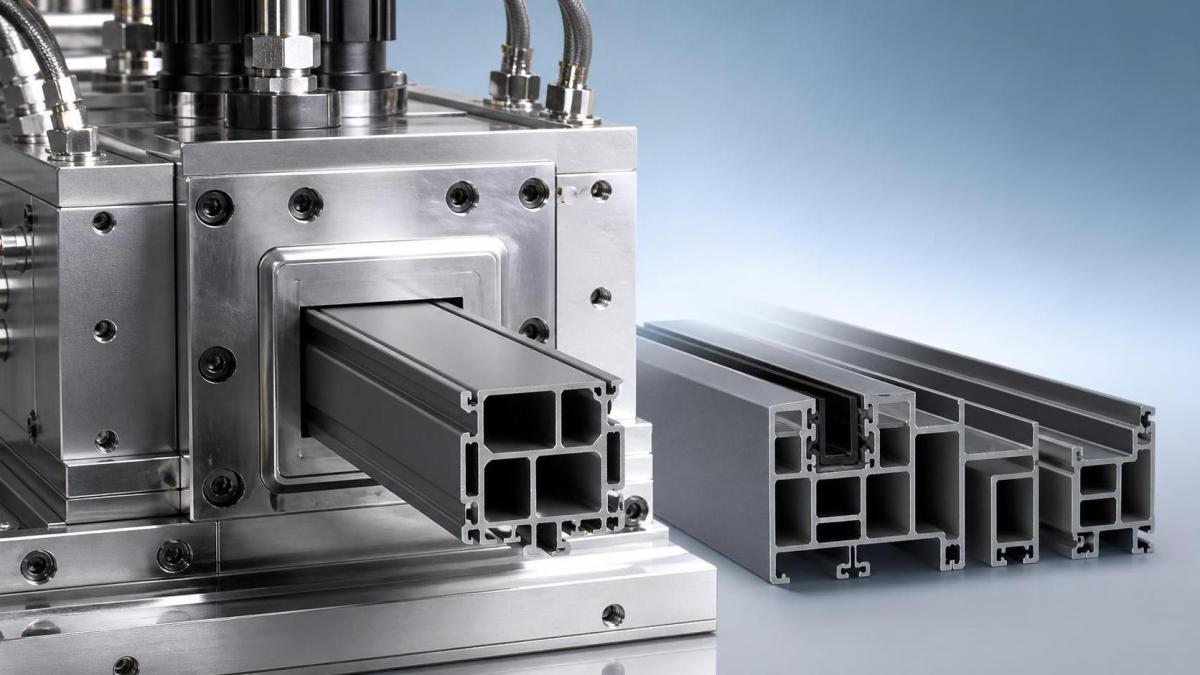
Thermal performance deserves its own discussion. FRPU profiles have intrinsically low thermal conductivity compared with metal-based framing, and they do not rely on a metal thermal break to interrupt conductive heat flow. However, the profile’s overall insulation performance still depends on its wall layout, chamber design, glazing interface, seals, frame depth, and the thermal behavior of connected components. A high-performing system is a coordinated design, not a single material claim.
Material Architecture: Resin and Reinforcement Are Part of the Tooling Decision
A custom mold shapes the profile, but the mold cannot be specified independently from the material system. Pultruded FRPU combines continuous fiberglass reinforcement with a polyurethane resin formulation. Their relationship affects surface quality, mechanical strength, dimensional stability, weathering behavior, and processing conditions.
Reinforcement placement is particularly important in structural fenestration profiles. Longitudinal glass fibers provide strength along the profile length, which is valuable for frame and sash members spanning an opening. Other reinforcement forms may be introduced to support transverse stability, wall integrity, or local features. The engineering objective is not simply to add more glass; it is to place reinforcement where the finished profile experiences load and where the pultrusion process can maintain consistency.
Resin selection and formulation influence how the material cures inside the heated die and how it performs after installation. Requirements may include resistance to moisture, UV exposure, chemical environments, or changing temperatures. Surface appearance also needs consideration, particularly when the profiles will receive coatings, color finishes, protective films, or decorative treatments. A supplier should review the proposed finishing route during development rather than treating it as an afterthought.
How the Pultrusion Die Is Engineered
After the profile geometry and material architecture are validated, mold engineering begins. The die is not a simple final-shape cavity. It is designed around how saturated reinforcements enter, consolidate, heat, cure, and emerge as a stable profile.
Die design normally considers the entry zone, where fibers and resin are guided into the intended arrangement; the forming section, where the material is compacted into the target cross-section; and the heated curing zone, where the resin hardens under controlled conditions. Internal mandrels, if used to create cavities or functional channels, require especially careful engineering. Their position must remain stable, and the profile must release cleanly without damaging delicate features.
Temperature management is central. Uneven heat can lead to incomplete curing, surface irregularities, distortion, or residual stress. Pulling speed must also match the resin’s curing response and the profile’s complexity. In practice, custom mold development is a coordinated production-system exercise: tool geometry, heating, material formulation, reinforcement package, and line settings are all connected.
For window and door profiles, dimensional control is critical because small variations can affect gasket compression, glazing bead engagement, hardware alignment, and corner assembly. Tooling therefore needs to account for expected material behavior during cure and cooling. This is one reason an experienced FRPU manufacturer will not promise that an initial drawing can be transferred to a die without engineering refinement.
Trial Production Is Where Assumptions Are Tested
The first trial run is not merely a demonstration. It is the stage where the profile becomes real enough to inspect, measure, fabricate, and challenge. Sample lengths are checked against agreed drawing dimensions and functional requirements. The team may examine wall consistency, surface condition, straightness, cavity definition, fiber distribution, and the integrity of key features such as glazing grooves or fastener areas.
For a window system, trial profiles should also be assembled into meaningful samples where possible. A cross-section can look correct in isolation yet reveal problems when seals are installed, a glass unit is seated, corner joints are connected, or hardware is mounted. Functional assembly provides valuable feedback on whether the design is friendly to real workshop conditions.
Depending on the intended application, evaluation may include mechanical checks, thermal design review, weathering-related material considerations, and compatibility checks with selected gaskets, sealants, coatings, or hardware. The purpose is not to burden the project with unnecessary tests; it is to verify the factors that matter to the final use case.
If changes are needed, they are documented clearly. Some refinements involve process settings, while others require adjustment to the profile design or die. Treating this phase as a constructive engineering loop, rather than a failure of the original concept, usually produces a more reliable final system.
Common Shortcuts That Create Problems Later
Several risks appear repeatedly in custom composite profile projects. The first is designing only for appearance. Slim sightlines are attractive, but they must still provide adequate stiffness, glazing support, and manufacturable wall geometry. The second is copying a metal profile without reconsidering how composite material carries load. FRPU does not need to imitate aluminum or steel section-for-section; its strength lies in designing around its own thermal and structural characteristics.
Another frequent issue is postponing hardware and glazing decisions. Changing glass thickness or locking hardware after tooling is finalized can force compromises in rebates, fastener zones, or sash depth. Similarly, assuming that a profile will “fit standard accessories” without physical confirmation can lead to expensive rework during fabrication.
Finally, buyers should be cautious about evaluating a mold solely by its upfront cost. Tooling value lies in the accuracy, service life, process stability, and repeatability it supports. A lower-cost die that produces inconsistent dimensions or requires frequent adjustment can cost more in rejected material, assembly delays, and field complaints than a carefully engineered solution.
What to Provide When Requesting a Custom FRPU Profile
A productive discussion with a pultrusion manufacturer becomes much easier when the request includes more than a profile sketch. Useful inputs include cross-section drawings, desired visible dimensions, glass configuration, hardware details, gasket preferences, connection concepts, color or surface requirements, target application, estimated profile lengths, and expected order program. If the system will be installed in coastal, chemical, high-UV, or low-energy building environments, that should be stated early as well.
Where a complete design is not yet available, the supplier can often support OEM and ODM development from a functional brief. The most effective projects are collaborative: the customer brings market and system requirements, while the manufacturer contributes pultrusion know-how, FRPU material expertise, and fabrication awareness.
A Mold Is the Beginning of a Window System, Not Just a Production Tool
Custom mold development for pultruded FRPU profiles is ultimately about creating dependable building-envelope components. The best result is not simply a profile that matches a CAD drawing. It is one that runs consistently in production, supports efficient window fabrication, accepts the required glazing and hardware, and contributes to a durable, energy-conscious finished installation.
For steel-free FRPU windows and doors, this development route offers a practical way to combine low thermal conductivity, corrosion resistance, light weight, and structural strength in forms tailored to real building needs. Whether the target is a villa, passive-house project, coastal development, commercial façade opening, or specialized industrial environment, careful tooling decisions make the difference between a profile that merely exists and a system that performs with confidence over time.