FRPU
window
Pultruded FRP fiberglass window with polyurethane resin matrix. No steel liner, excellent thermal insulation, salt‑corrosion & weather resistance. Fit for passive house, coastal and high‑rise projects, customizable casement & sliding styles.。
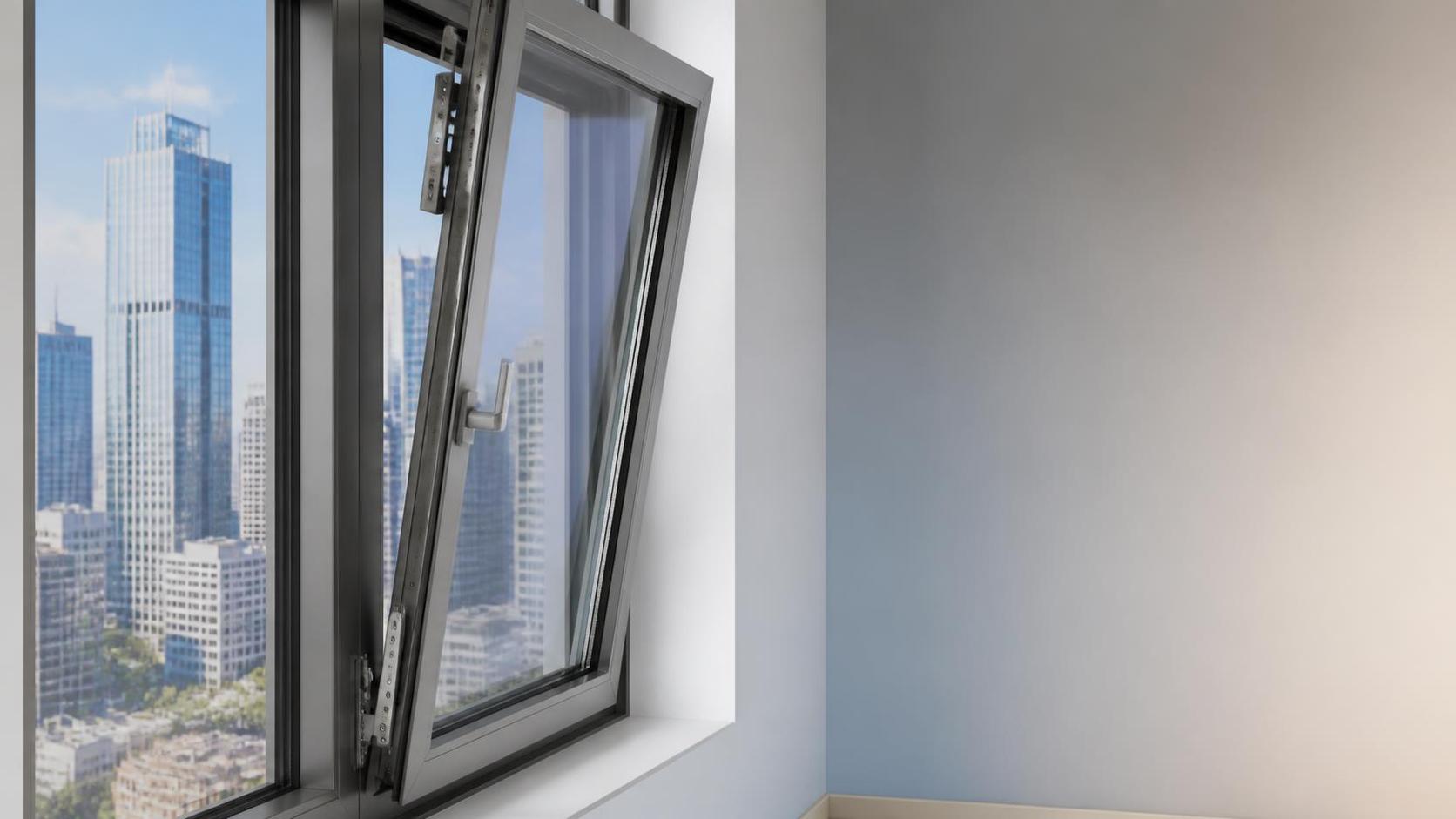
FRP window GRP window)
Fiberglass window
Fiberglass reinforced polymer window
Pultruded fiberglass window
What Is A Custom FRPU Profile Manufacturer?
A custom FRPU profile manufacturer designs and produces pultruded fiberglass-reinforced polyurethane profiles for window, door, facade, ventilation, and related building-envelope systems. FRPU, also described as GFRPU in some supply chains, combines continuous glass-fiber reinforcement with a polyurethane resin matrix. The resulting profile is engineered to carry loads, limit heat transfer, resist moisture and corrosion, and accept precision machining for glazing, seals, hardware, drainage paths, and installation interfaces.
Customization means more than cutting stock lengths. A capable supplier can adapt profile cross-sections, wall geometry, reinforcement arrangement, thermal chambers, color finishes, gasket interfaces, glazing rebates, drainage details, and fabrication dimensions to a project or system requirement. For procurement teams, the practical distinction is whether the manufacturer controls pultrusion and finished-window assembly, since that control affects dimensional consistency, technical communication, lead-time coordination, and accountability across the supply chain.
In the window and door market, a custom FRPU profile manufacturer commonly supplies either profile materials for local fabricators or fully assembled system windows for direct installation. AnHui Te Chuang operates across both stages, producing composite profiles and finished windows. Its portfolio includes casement, sliding, bi-fold, tilt-and-turn, awning, hopper, fixed, and adjustable louver systems, allowing buyers to align opening function with climate exposure, facade design, ventilation needs, and project operating conditions.
Material Science And Technical Principles
Pultrusion is a continuous composite manufacturing process. Reinforcing glass fibers are guided through a resin-impregnation stage, shaped in a heated die, and cured into a continuous profile before being cut to length. The glass fibers provide tensile and directional stiffness, while polyurethane binds the reinforcement, protects it, and forms the profile body. Profile behavior depends on fiber content, fiber placement, resin formulation, die design, cure control, and the geometry of the final cross-section.
FRPU is particularly relevant to energy-conscious windows because it can avoid the highly conductive metal path associated with conventional steel-reinforced assemblies. A zero-metal thermal-bridge design does not eliminate the need to assess the whole window, because glass, spacer systems, frame geometry, seals, installation gaps, and opening hardware also influence performance. It does, however, give designers a material platform with comparatively low thermal conductivity and no internal steel reinforcement requirement for the stated system concept.
The same material logic supports durability in wet, salty, and chemically exposed environments. Unlike unprotected metal components, the composite profile itself does not create a metal-rust pathway. Its performance still depends on suitable coatings, compatible sealants, drainage design, fastener selection, and correct installation. Buyers should therefore evaluate the assembled window rather than treating a profile data point as a complete guarantee of air tightness, water tightness, wind resistance, acoustic control, or service life.
Profile And Window System Categories
FRPU profiles can be classified by their function in an assembly. Frame profiles anchor the window to the opening; sash profiles carry movable glazed units; mullion and transom profiles divide larger assemblies; glazing beads retain glass; and auxiliary profiles address connection, drainage, trim, screens, or reinforcement transitions. This functional classification helps buyers turn an architectural drawing into a complete bill of materials rather than sourcing only visually similar main-frame sections.
Window configuration is the second major classification. Casement and tilt-and-turn units suit projects seeking controlled ventilation and compression sealing. Sliding units can serve spaces where sash swing clearance is limited. Bi-fold systems support wider openings, while top-hung awning, hopper, and louver windows are often selected for ventilation-focused areas. Fixed windows maximize daylight and views where opening capability is unnecessary. The appropriate choice depends on opening size, user operation, cleaning access, facade pressure, and local weather exposure.
Glazing and hardware create a third selection layer. Insulated glass is commonly considered for thermal and sound-control goals, Low-E glass can support energy-saving design, and laminated tempered safety glass may be specified where impact resistance or retention behavior is relevant. Security screens, multi-point locking hardware, waterproof sealing systems, and compatible gaskets should be designed as a coordinated package. A custom FRPU profile manufacturer should confirm tolerances among glass thickness, hardware routing, sash weight, seals, and drainage channels before production.
Why FRPU Matters In Window And Door Projects
Traditional window material choices often require tradeoffs among insulation, stiffness, corrosion behavior, maintenance, fabrication flexibility, and appearance. FRPU systems are considered when a project needs a stable composite frame with low heat transfer and no steel reinforcement inside the profile. This is relevant for high-performance residences, villas, passive-house-oriented designs, commercial buildings, hospitality properties, industrial sites, and coastal construction where building-envelope reliability affects comfort, operating costs, and maintenance planning.
AnHui Te Chuang positions its FRPU window profiles around zero metal thermal-bridge construction, corrosion resistance, profile stability, and long-term sealing performance. These attributes should be assessed against the project specification rather than used as generic material claims. For example, coastal projects need attention to salt-spray exposure and hardware compatibility, while chemical facilities need the frame, glazing, seals, anchors, and operating components reviewed for their actual corrosive conditions and cleaning procedures.
Integrated manufacturing can simplify execution when profile production, precision processing, and assembly are aligned. It reduces handoffs between a profile mill and a separate window fabricator, which can be useful when non-standard sizes, custom colors, new molds, or unusual glazing requirements are involved. For international buyers, the value is often practical: one technical contact can coordinate drawings, sample confirmation, fabrication details, inspection records, packing requirements, shipment planning, and remote installation support.
Who Uses Custom FRPU Systems And Where?
Typical buyers include window distributors, facade and glazing contractors, developers, architects, home builders, industrial construction contractors, and manufacturers seeking OEM or ODM composite-profile supply. Their needs vary. A distributor may prioritize a repeatable catalog and dependable replenishment; a contractor may need engineered dimensions and delivery sequencing; an architect may require color, sightline, opening, and glazing flexibility; and an industrial buyer may focus on environmental resistance, ventilation, and long-term maintenance access.
The systems are suited to residential homes, luxury villas, passive houses, retail spaces, homestays, industrial plants, and coastal buildings. In exposed climates, the design review should cover wind zone, rain intensity, salt exposure, solar aging, opening size, and anchoring substrate. In occupied buildings, it should also cover thermal comfort, condensation risk, acoustics, security, emergency egress, and accessibility. Local building codes and project specifications remain the governing requirements for any final product selection.
AnHui Te Chuang reports exports to Europe, America, Southeast Asia, Oceania, and other international markets. Its referenced passive-house and ultra-low-energy villa projects in Europe and North America use tilt-and-turn, casement, and fixed configurations to balance insulation, sound control, daylight, and architectural appearance. These examples illustrate where a custom FRPU profile manufacturer can contribute, while each project should still validate local documentation, testing scope, installation method, and required approvals independently.
Manufacturing, Quality Control, And Installation
A disciplined production sequence starts with drawing review and material confirmation. The manufacturer establishes profile geometry, resin and reinforcement requirements, intended glass range, hardware routing, gasket interfaces, machining points, and color or surface requirements. During pultrusion, process control focuses on reinforcement feed, resin impregnation, die temperature, pulling stability, cure condition, and dimensional accuracy. Profiles are then cut, machined, prepared for assembly, and checked against the approved technical documents.
At finished-window stage, key operations include frame and sash fabrication, corner connection, hardware installation, glazing, gasket fitting, drainage verification, seal application, functional adjustment, and final packing. AnHui Te Chuang states that it applies incoming-material inspection, in-process monitoring, air and water tightness testing, wind-load testing, and final inspection. Buyers should request the relevant inspection plan, acceptance criteria, available reports, and product-specific documents early enough to resolve questions before mass production.
Installation quality is inseparable from system performance. Installers should verify opening dimensions, substrate condition, frame squareness, anchor spacing, perimeter gaps, flashing or water-management details, compatible sealants, drainage paths, and sash operation after glazing. Thermal and weatherproofing continuity at the wall interface matter as much as the frame itself. A custom FRPU profile manufacturer can provide CAD drawing support and remote guidance, but local installers must follow the approved project details and applicable construction rules.
Selection Criteria, Total Cost, And Future Trends
A sound sourcing brief specifies application type, design wind load, water exposure, target thermal performance, glass build-up, acoustic needs, operating mode, security requirements, finish, quantities, delivery schedule, and project location. Request section drawings, proposed glazing range, hardware compatibility, fabrication tolerances, sample approval process, quality documents, packaging method, and warranty terms. Compare technically equivalent assemblies, not profile prices alone, because a low initial frame cost can conceal missing glazing, hardware, machining, drainage, testing, or installation-support scope.
Total cost of ownership includes mold development where required, material and fabrication cost, glass and hardware, freight, duties, local testing, installation labor, maintenance, replacement risk, energy use, and operational disruption. ROI analysis should be project-specific. A higher-performance assembly may be justified when it helps reduce heating or cooling demand, extends maintenance intervals in corrosive areas, lowers rework risk, or supports a building-performance target. Procurement teams should model these variables over the intended ownership period using realistic local assumptions.
Future demand is likely to be shaped by tighter energy targets, durable construction in severe climates, greater attention to whole-life cost, and demand for configurable building-envelope systems. Digital drawings, traceable inspection records, modular profile families, improved glazing packages, and more precise project coordination are becoming increasingly important to B2B buyers. For projects requiring customized FRPU windows, early engagement with a custom FRPU profile manufacturer helps identify technical constraints before drawings, molds, procurement schedules, and site installation plans become difficult to change.